
Pigeons on the grass - alas.
Updated: Jan 8
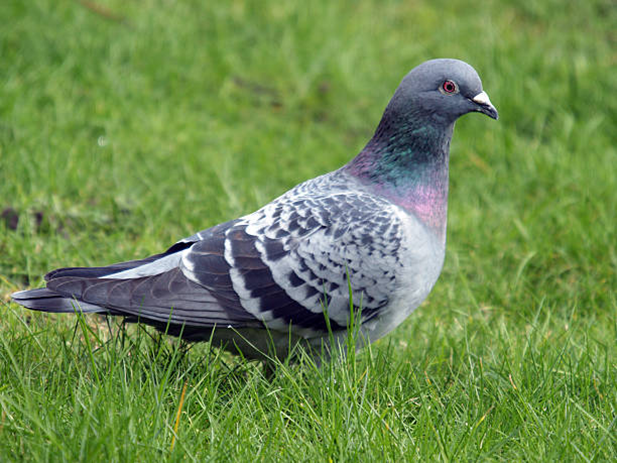
The common pigeon, or Rock Dove, found in Western Australia – seen here, on the grass
I was reading an anthology of wonderful stories by the American humorist James Thurber the other day and came across a line of poetry that he lampooned: “Pigeons on the grass, alas”.
It was only when I pronounced ‘grass’ the American way (to rhyme with ‘alas’) rather than the Australian way (‘grahse’) could I start to make any sense at all of the line – at least it contained a rhyme. But that was as far towards comprehension that I managed. Otherwise, I could make neither head nor tail of it. A minute’s research did not help. It is the opening line of a famous poem by the American poet Gertrude Stein (friend of Picasso and Hemingway) and when you read the whole thing, the mystery only deepens. Here is the poem in its entirety:
Pigeons on the grass alas.
Pigeons on the grass alas.
Short longer grass short longer longer shorter yellow grass.
Pigeons large pigeons on the shorter longer yellow grass alas pigeons on thegrass.
If they were not pigeons what were they.
If they were not pigeons on the grass alas what were they.
He had heard of a third and he asked about it was a magpie in the sky.
If a magpie in the sky on the sky can not cry
If the pigeon on thegrass alas can alas and to pass the pigeon on the grass alas
And the magpie in the sky on the sky and to try and to try alas on thegrass
Alas the pigeon on the grass the pigeon on the grass and alas.
They might be very well they might be very well very well they might be.
Let Lucy Lily Lily Lucy Lucy let Lucy Lucy Lily Lily Lily LilyLily let Lily Lucy Lucy let Lily.
Let Lucy Lily.
Make what you can of that!
My reaction was to mutter to myself that Thurber was right to lampoon it. But as is so often the case these days when I find a poem incomprehensible, especially when it is lauded by the intellectuals as brilliant poetry, I start to wonder whether it is me who is stupid. Surely, I am missing something! However, I was consoled to read Thurber’s view:
I saw Gertrude Stein on the screen of a newsreel theatre one afternoon and I heard her read that famous passage of hers about pigeons on the grass, alas (the sorrow is, as you know, Miss Stein’s). After reading about the pigeons on the grass alas, Miss Stein said, ‘This is a simple description of a landscape I have seen many times.’
I don’t really believe that that is true. Pigeons on the grass alas may be a simple description of Miss Stein’s own consciousness, but it is not a simple description of a plot of grass on which pigeons have alighted, are alighting, or are going to alight. A truly simple description of the pigeons alighting on the grass of the Luxembourg Gardens (which, I believe, is where the pigeons alighted) would say of the pigeons alighting there only that they were pigeons alighting. Pigeons that alight anywhere are neither sad pigeons nor gay pigeons, they are simply pigeons.
It is neither just nor accurate to connect the word alas with pigeons. Pigeons are definitely not alas. They have nothing to do with alas and they have nothing to do with hooray (not even when you tie red, white, and blue ribbons on them and let them loose at band concerts); they have nothing to do with mercy me or isn’t that fine, either. White rabbits, yes, and Scotch terriers, and blue- jays, and even hippopotamuses, but not pigeons … nobody and no animal and no other bird can play a scene so far down as a pigeon can.
I always find Thurber amusing. But, speaking of ‘pigeon literature’ if I can use such a term, “amusing” is not a word I would apply to The Pigeon, a novella by Patrick Suskind. We have had a copy of this book on our shelves for many years, but it was only the other day (pigeons being on my mind at the time) that I got it down and read it.

I like to recommend books to my friends, but I hesitate to do so with this one. There are no pigeons on the grass in this story. It is a brilliant, but dark psychological study of a strange man spooked by a sinister pigeon - and spooked to the degree that his whole life unravels. Far from amusing I found it profoundly disturbing. Gertrude Stein’s poem is hilarious by comparison [Endnote 1].
It is true that pigeons are sometimes referred to disparagingly as “rats with wings”, no doubt due to their efficiency as scavengers, but I can’t imagine anyone finding an individual pigeon scary. I also recall Tom Lehrer's satirical (and gruesome, but witty) song Poisoning Pigeons in the Park, in which he seems to celebrate violence against innocent brds. My views are different: I regard pigeons as beautiful and accomplished birds, a source of pleasure, not malevolence.
Pigeons and me
Reading and thinking about pigeons has led me to remember the shameful fact that I once shot a brace of them and afterwards ate them. This was back in the 1950s when I was less of a rabid conservationist than I am today – but even then, I think I had an excuse. The birds I dispatched were the common pigeon found in the south-west of WA. It is not a native, but an introduced species and is possibly occupying an ecological niche once enjoyed by some native bird. In England it is known as the Rock Pigeon and in Australia as the Rock Dove [2]. Rock doves were introduced to Australia by early English settlers, and here they found things to their liking, particularly the inner cities where they can roost and nest on the ledges of tall buildings, as if back on the rocky cliffs of home.
By the way, this is the same species of pigeon that once crowded Trafalgar Square in London, before the authorities brought in hawks to get rid of them (more about these particular pigeons in a moment). But in Trafalgar Square they have only been “controlled”, not exterminated … as was the fate of the Passenger Pigeon in the USA, and seems likely to be the fate of the turtle dove in England [3], two of the sorriest of mankind’s depredations on nature.
Australian pigeons
Australia’s native pigeons are very beautiful birds. We often see the Crested Pigeon around our property at Gwambygine and whenever I see one, I am reminded of the delightful description of them by ornithologist Graham Pizzey: “they have a curious swept-back hair-do”.

A Crested pigeon – found almost everywhere in Australia, including this one on the grass (alas).
I am not famous for my bird photography, but I did once succeed in getting a lovely photograph of a native pigeon. We were driving slowly and quietly through the mallet forest at Boyagin, looking for numbats, and I spotted one of my favourite birds, a Bronzewing Pigeon sitting calmly on a log by the side of the road; his wife (or perhaps her husband) sat on a nearby branch.

The Bronzewing we spotted at Boyagin, of which I managed this amateurish photograph.
The two birds waited until I had taken the photograph and then leapt into the air and scorched away down the firebreak and then flashed off to disappear amongst the trees. Bronzewings have an astonishing turn of speed. I remember I would occasionally flush a pair of them when driving along a narrow forest road in the karri country, and they would streak off down the track in front of my speeding vehicle, effortlessly outpacing it. They reminded me of the pair of jet fighters that frightened the Bejesus out of me when they suddenly appeared from nowhere, screaming low over heather-clad moors in the Scottish Highlands, one of the two most hair-raising moments in my life [4].
Banjo Patterson knew about bronzewings and their superb flying. His mournful poem The Dying Stockman has the young man, as he lies dying, calling to his mates:
… "Oh! had I the flight of the bronzewing,
Far o'er the plains would I fly,
Straight to the land of my childhood,
And there would I lay down and die …
I was not surprised when I read recently that pigeons had been recorded as flying at over 100 km/hour. These were ‘homing’ pigeons which are not just fast but have the astonishing ability to navigate back to their home nest from vast distances and without any idea where they are starting from … another of those mysteries of nature, still unexplained by science [4].
The homing pigeon is also at the root of that tasty little saying “their pigeons have come home to roost”, a metaphor for the unhappy consequences of misguided action. One of my most admired colleagues back in the day was Senior Forester Arthur Ashcroft, an expert in everything to do with bushfires. Arthur would observe some eminently preventable bushfire catastrophe, mutter “their pigeons have come home to roost” and we would all nod in agreement.
But there is more to pigeons than their speed of flight and astonishing homing ability. I was once told by an old bushman that bronzewings are perhaps the finest eating of all Australian birds. Similarly, my forestry colleague Ian Kealley told me how one day he had been:
… chatting with an old woodline firewood cutter who told me of a big ‘secret’ rockhole on a granite outcrop down near Cave Hill south of Coolgardie. He and his mates used to go there once a year for a big pigeon shoot, always undertaken just at dusk. They were bronzewings, he said, “good tucker”, and the bag was always big.
The explorer Ernest Giles also thought they were good tucker. In 1875, having crossed inland Australia on foot, and desperate for something good to eat, he came to a rocky hill north of the current town of Southern Cross which abounded with “bronze-wing pigeons” and on which he and his party feasted. He called the spot Pigeon Rocks.
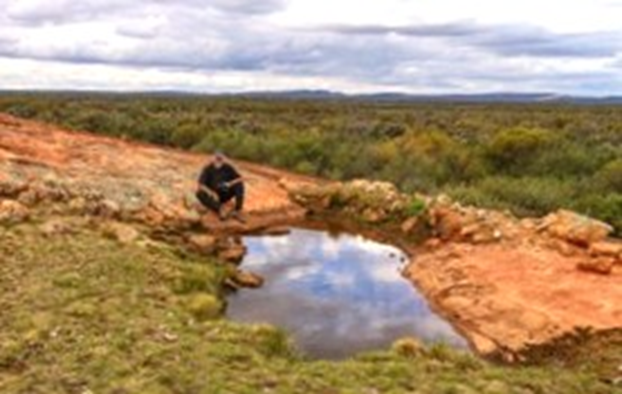
Rock pool at Pigeon Rocks, a perfect watering spot for bronzewings (photo by Alison Kruger)
I plan to explore Pigeon Rocks next winter and hope to see some bronzewings, but I am not likely to shoot and eat them. My days of pigeon hunting are over. Nevertheless, the subject of pigeon cooking (and eating) is intriguing, and I am not done with either yet.
Cooking and eating pigeons
Firstly, I have to admit that the pigeon shooting I shamefully admitted earlier in this story was not an example of expert marksmanship. The birds were members of a large flock of Rock Doves feeding on spilled grain near the stables on a farm where I was spending my school holidays. They died when I fired a shotgun into them, and like the brave little tailor in Grimm’s fairy story, I got seven with one blow. I took three back to the farmhouse, where the Boss’s wife baked them into a pigeon pie. Later this was dished up for the evening meal. I recall the pastry was delicious, but the pigeon was indigestible - tough, gamey and stringy. Thinking back, I wonder if our chef had ever attempted pigeon cooking before and whether she realised how essential it is to stew a wild pigeon for some considerable time before baking it into a pie, a subject on which at the time I also knew nothing – and still did not until quite recently [5].
Recalling the inedibility of that pigeon pie, and my ignorance of how to cook pigeons, I became curious about the popularity of pigeon pies in England and America – or at least my understanding of their popularity, as gained from my reading of English literature. An enormous pigeon pie is the sort of meal you imagine being set before Hordle John at the great refectory table in his medieval monastery, as described in The White Company. Or perhaps pigeon pie was a favourite of Mr. Pickwick or was partaken by the pilgrims at some roadside inn in The Canterbury Tales. One thing we know for sure is that in 19th century London there were pigeon-sellers in the markets and on the streets, and that they had a ready custom. Country Squires all had a ‘dovecote” in which pigeons were raised and fattened for the pot; indeed, having a dovecote was a mark of aristocracy. Pigeon was on the table on Christmas Day for many Britons during the dark days of World War 2 and its aftermath, when food was rationed and fowls were unobtainable. Clearly the pigeons eaten and enjoyed back then were not the tough, stringy birds I once tackled in the Western Australian bush… or they must have been better cooked.

The Dovecote – 19th century painting by William Holman Hunt
My favourite food writer Elizabeth David provides a clue. She writes of pigeon cookery and pigeon pies with enthusiasm, but she emphasises the need for good preparation:
… the ordinary pigeons which one buys in England are rather dull and dry but cooked a la Bearnaise they can be excellent.
First of all, braise the pigeons in butter, in a covered pan, 30-40 minutes, until they are tender; take them out, cut in halves and put into a bowl with the juice of a lemon, a glass of white wine or brandy, salt and pepper, and leave them in this marinade while you prepare a puree made from the hearts of cooked artichokes, at least 3 for each pigeon; put this puree into an earthenware casserole with a lump of butter; sauté the livers of the pigeons in the butter in which the birds have originally cooked, adding the wine or brandy marinade, and press them through a sieve, with the liquid, into the artichoke puree; put the pigeons on top of the puree and heat it gently.
My other favourite food writer Jane Grigson is also a pigeon enthusiast. Writing back in 1971, in the days when there was such a thing as a poulterer (a butcher who sells poultry), she says:
One of the pleasures of autumn is the arrival of woodpigeons at the poulterer’s. They taste delicious - and even better when the winter is over, if the spring is mild enough to allow them to grow fat on young corn. Also, they can cost as little as lOp apiece, if you are prepared to pluck and dress them yourself ….
… the woodpigeon’s gamey flavour makes it suitable, along with wild rabbits, and with hares and the more expensive game, for cold game pies.
She goes on to say:
… domestic pigeons can be bought from Harrod’s poultry counter. These birds are American squabs, bred in Kent. They’re similar to the pigeons which cooed in the dovecots of medieval lords of the manor, or modern French pigeonneaux, or for that matter, to the pigeons which were given nesting boxes by early Mesopotamian farmers 6,000 years ago. They are bland and tender, take less time to cook than wild pigeon, and can be roasted without larding - but they are not cheap. I believe that there is only one breeder of these squabs in Britain, which seems a pity. Like venison, these delicious birds could add a welcome variety to our meat dishes, if they were produced in greater quantity for the home market.
I know many people who enjoy shooting wild ducks - or used to, in the days before it was banned in Western Australia - and it would not surprise me to find that duck hunters would have no compunction about shooting pigeons and baking them into a pie. This of course would be illegal these days, as native pigeons are fully protected under the State’s wildlife conservation laws – but there is no ban on shooting the introduced Rock Dove. On the off chance that someone finds themselves in possession of a brace of freshly executed Rock Doves, or knows where to purchase farm-raised pigeons, here is Jane Grigson’s recipe for turning them into pigeon pie. It was originally intended for ‘dovecot pigeons’ (specially bred for eating), she says, but can be used for wild woodpigeons, so I imagine it would work just as well for the Australian Rock Dove pigeon.
Ingredients:
shortcrust or puff pastry
4 pigeons, plucked and cleaned
55 g. butter
beef stock
170g rump steak
4 hard-boiled egg yolks
1 tablespoon finely chopped mild onions
200g. sliced mushrooms
parsley, salt, pepper
Method:
Brown the pigeons in butter and simmer them for 1 ½ hours, covered in beef stock. Halve the pigeons along breastbone. Lay steak on the bottom of a buttered pie dish, season and lay pigeon halves on top. Season again and fill the gaps with hard-boiled egg yolk, crumbled. Add onion, mushrooms, plenty of parsley, and stock to cover the meat. Put a band of pastry round the rim of the dish, moisten it, then cover with a lid of pastry. Knock up the edges, decorate and brush with beaten egg. Put into a good hot oven to start with for 20 minutes, then reduce the heat to 350°F. Protect the pastry when it begins to look nicely browned with thick paper, or several layers of greaseproof paper. Total cooking time for the pie: one and a half hours.
I have to say this sounds pretty good. Indeed, very superior to the pigeon pie my old forestry mate Pat Cooney once told me about. He recalled reading that:
… the noted Australian poet and essayist Leon Gellert, when he was a young trainee journalist, lived with some other young men in a cheap boarding house in Sydney. There, one of the cook’s favourites was pigeon pie. This was not particularly well-liked but was tolerated until somebody found a set of tiny paws, with claws, in one serving. This indicated that when short of pigeons the cook was making up the dish with rats. Pigeon pie was no longer eaten at that boarding house, Gellert said, and disappeared from the menu.
Meanwhile in the USA
The American foodie Alan Bergo, on the other hand, enthuses about pigeon cookery and gives his own recipe for pigeon pie. Bergo says:
I talked to a hunter last year and told him I was excited to harvest pigeons. He laughed, looked at me like I was an idiot, and told me he shoots them and throws them in the woods as they're not worth eating. I kept my mouth shut.
Far from throwing them away, Bergo makes what he calls a ‘rustic’ pie. It has a thick, rich filling, made from pigeons which are cooked in a casserole until the meat is tender before going into the pie.
In addition to pigeons, the pie contains mushrooms, bacon, cognac, onions and leek, plus various herbs and spices. If you are interested and have just acquired some pigeons, you will find the reference at the end of the story. However, I warn my Australian readers that Berg is using the American “plump-breasted” squab pigeon, a far more palatable bird than the common Rock Dove found roosting on statues or pecking at the grass in Perth’s Supreme Court Gardens.

Bergo has included a photograph of his rustic pigeon pie and it certainly looks tasty:
An aside:
Speaking of plump-breasted pigeons reminds me of the sad story of Captain Edmund Blackadder during his time in the trenches in the First World War. Desperate for fresh meat, Blackadder shot a passing pigeon which later his batman Baldrick made into a ‘delicious’ stew, which Blackadder consumed. While examining the bird Baldrick had discovered that it was an official carrier pigeon and that it had a message tied to its leg. The message advised that the shooting of carrier pigeons was a court-martial offense. Furthermore, it turned out that this particular pigeon, named Speckled Jim, was the personal pigeon of Blackadder’s commanding officer, the mad General Melchitt, who also presided over Blackadder’s subsequent court-martial and who memorably referred, from the bench, to the accused Blackadder as “The Flanders pigeon-murderer” …
Gourmet pigeon
Commercial pigeon farming, it turns out, is a growing industry in Australia, with the product exported to Asia or sent to city restaurants where it is now regarded as a gourmet dish. I have seen some of the menus and read up on some of the recipes, and I see that they have become very sophisticated, for example “Pot Roasted Pigeon in Red Wine”.
The trouble with gourmet recipes like this is that they are too complicated for a rough old bush cook like me. I prefer simplicity and so my favourite pigeon recipe is this: pluck the pigeons and clean out their insides; brown them in hot olive oil in a frying pan; season the browned pigeons and place them in a well-greased camp oven, each covered with a rasher of bacon; add a chopped carrot, potato and onion and cook on slow coals for an hour or two.
I haven’t actually tried this, but I’ll give it a go one day, provided someone finds me some plump-breasted squab pigeons. If they come out looking like this picture, I will count the recipe as a good one:

But while simplicity in cooking is always to be recommended, it can be taken to extremes, as the following story indicates:
Back to Trafalgar Square
I was lucky in my early days as a young forestry officer in that I had a wonderful boss and mentor. This was Steve Quain, perhaps the finest forester I ever knew. Steve was accomplished at every aspect of the job, from establishing tree plantations, to regenerating karri forest, to building roads and to controlling bushfires. He was also a good bloke and over the many years of our association we became firm friends.

Steve Quain - forester and bushman
Steve was intelligent and well-read, but he was also by inclination a bushman, and before I knew him, he had spent some years knocking around the outback of Central Australia, the remotist wilds of Canada and the southern forests of WA. The latter were, in the early 1950s, a virtual wilderness. During those times he had often “lived rough” and had perforce learned a range of basic survival skills and bushcraft. These he later put to good use:
After I had graduated from forestry school in 1952 [said Steve] and worked in the bush for a few years, I became restless and wanted to see the wider world. I resigned my job and went to Canada, where I got a job with the British Columbia Forest Service, doing assessment and surveys and building roads in remote mountain forests. When it was time to return home, I decided to come back via England, where I spent a few weeks seeing the sights. Eventually, when my savings were all but exhausted, I returned to London, visited the shipping office and used my last few pounds to buy a ticket on a ship bound for Western Australia. The ship was due to leave in three days. Luckily, I had a tiny bed-sitter in Earl’s Court where the rent was paid up, and it had a gas-ring. The trouble was, I was completely skint and I needed to eat.
Steve’s solution would have warmed the cockles of any hunter-gatherer. Each morning, he would walk down to Trafalgar Square and sit on a bench. Here he would soon be joined by a clutch of pigeons hoping he might give them some crumbs. Steve would adroitly whip his hat over a pigeon, and then when he felt he was unobserved he would wring its neck and secrete the corpse under his greatcoat. Back in the bed-sitter, the birds would be plucked, cleaned and spit-roasted on the gas ring. He lived on pigeons, three meals a day for three days before joining the ship for home.
Last word
Leaving (reluctantly) my memories of Steve, I conclude these ornithological/culinary notes with a story about one of our loveliest native pigeons – the White-Quilled Rock Pigeon, denizen of the sandstone country of the far north.

The White-quilled Rock Pigeon of Kimberley.
It is a beautiful and shapely bird but has an alarming defense mechanism. On one occasion this almost did for me. I was exploring the majestic bushland in a national park near Kununurra in the east Kimberley, gazing about at the rugged scenery and appreciating the mild, sunny July day and the cloudless blue sky. I did not know about White-Quilled Rock Pigeons at the time and was not aware that they were ubiquitous in this country. Nor did I know that small flocks of them feed invisibly on the ground in long grass … until you almost walk on them! They then erupt from under your feet with an explosive and deafening clatter of wings, fifty birds acting as one.
The first time they detonated from under my feet with their thunderous death rattle, going like the clappers, my heart missed about nine beats, and I felt sure I was having a coronary.
Well, I survived. But had I not done so, I fear it would have been a case of “Roger on the grass (alas)”, a subject far worthier of a poem by Gertrude Stein than the one on pigeons, at least in my opinion.
End Notes
Patrick Suskind also wrote the novel Perfume, a terrible story of passion with a horrifying ending, but nevertheless an international bestseller.
Doves and pigeons are basically the same bird – members of the same family. The difference is basically linguistic: the word ‘pigeon’ comes to English from French, and the word ‘dove’ from Nordic languages like German. The application of one name or the other seems to have been arbitrary. Strangely there is a different mythology for each, the dove symbolising peace, while the pigeon symbolises fidelity.
In my days as a high school student in the 1950s we attended a quasi-religious assembly every morning, a feature of which was a reading from an old King James bible. I always loved the Song of Solomon but could never quite understand this line: “… the flowers appear on the earth; the time of the singing of birds is come, and the voice of the turtle is heard in our land”. Only years later did I come to understand that Solomon was not talking about your actual turtle, but about the Turtle Dove, a pigeon found naturally in Africa, and like the Rock Dove, happily introduced to Australia.
The Western Australian bronzewing pigeon has had its ups and downs over the last 50 years. Because they fed and mostly nested on the ground, they became easy prey for the feral fox. However (I am told by famous wildlife ecologist Per Christensen), natural selection was at work, and the birds that nested off the ground in shrubs and small trees, were favoured and survived. Moreover, the bronzewing likes to eat the seeds of Gastrolobium plants, which contain a particularly savage poison. Like all our native animals, the pigeons are immune to this poison, but the Euroopean fox is not, so that a fox eating a pigeon that had recently eaten Gastrolobium seeds would be poisoned and die. This knowledge (and associated research by wildlife scientists like Per) culminated in the use of meat baits containing a synthetic form of the same poison, known as 1080, which has greatly reduced feral fox numbers in our forests and woodlands. The outcome has been a wonderful recovery of threatened native species such as the woylie and numbat and including the bronzewing pigeon which today is flourishing.
My ornithological friend Denis Saunders has a good story about homing pigeons, harking back to the War, in which his father was the pilot of a RAAF Catalina Flying Boat. Squadron Leader Saunders related how his counterparts in RAF Coastal Command, flying Catalinas and Sunderlands from bases in England, always carried a homing pigeon when they were on long-range patrols, so it could be sent back to base with a message if the aircraft was forced down. The RAF aircrew also had a cunning plan about what they would do if they lost their navigator and were having trouble finding their way home: the pigeon would be released inside the aircraft, allowed to circle about until it took up a constant heading, and then the aircraft would be pointed so as to keep the pigeon in a ‘fore-and-aft’ axis, thus providing a directional gyro.
The toughness of Australian avifauna has long been the subject of culinary jokes. For example, one recipe for cooking Pink and Grey Galahs requires the addition to the stew pot of an iron railway spike, known as a ‘dog’. The birds are ready to eat when the spike is tender.
References:
Bergo, Alan: https://foragerchef.com/pigeon-pie/#recipe.
David, Elizabeth (1999): Elizabeth David Classics. Grub Street, London.
Grigson, Jane (1973): Good Things. Penguin Books, Middlesex England.
Peacock, David, Per Christensen and Brian Williams (2011): Historical accounts of toxicity to introduced carnivores consuming bronzewing pigeons (Phaps chalcoptera and P. elegans) and other vertebrate fauna in south-west Western Australia. Australian Zoologist 35(3):826-842.
Pizzey, Graham ((1980): A field guide to the birds of Australia. Collins, Sydney.
Thurber, James (1953): There’s an owl in my room. In: The Thurber Carnival. Penguin Books.


"Pigeons on the grass alas" is not a poem, it is from Stein's libretto for Thomson's opera "Four Saints in Three Acts" from 1928,
This is a good way to begin the new year. A delightful read, Roger.